IR4 Detector
IR4 is a dual-wavelength Infrared (IR) detector, which uses the principle of infrared absorption spectroscopy to measure the concentration and chemical composition in Polyolefins.
IR4 was the first infrared detector manufactured by Polymer Char and was designed to determine the concentration and chemical composition for polyolefin separation techniques such as CRYSTAF, TREF/CEF, and GPC. After its introduction in the 90’s, it was shown to be the most appropriate detector for high-temperature analysis of Polyolefins, given its high baseline stability and short stabilization time.
IR4 is the entry-level detector in Polymer Char Analytical Instruments, and the default detector in Quality Control Instrumentation.
Other Infrared detectors available are IR5 and IR6. Each detector has been developed with a specific application in mind: comparison of Infrared detectors (IR4, IR5, and IR6)
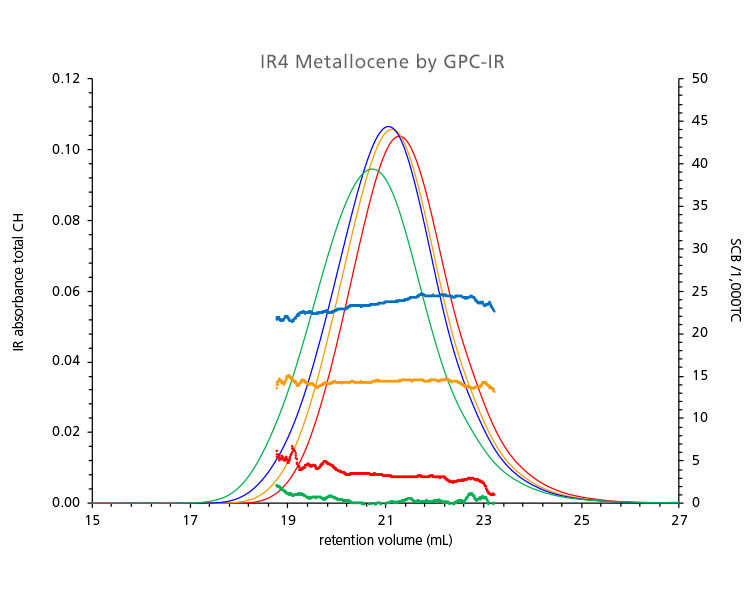
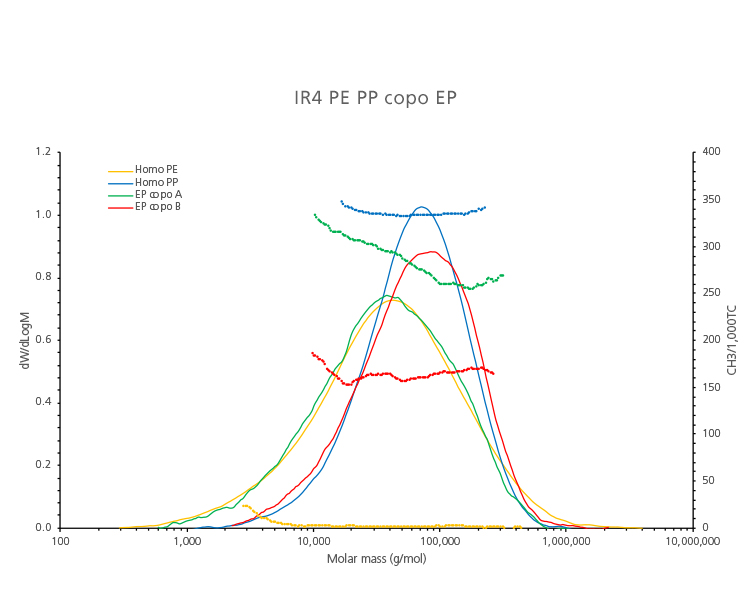
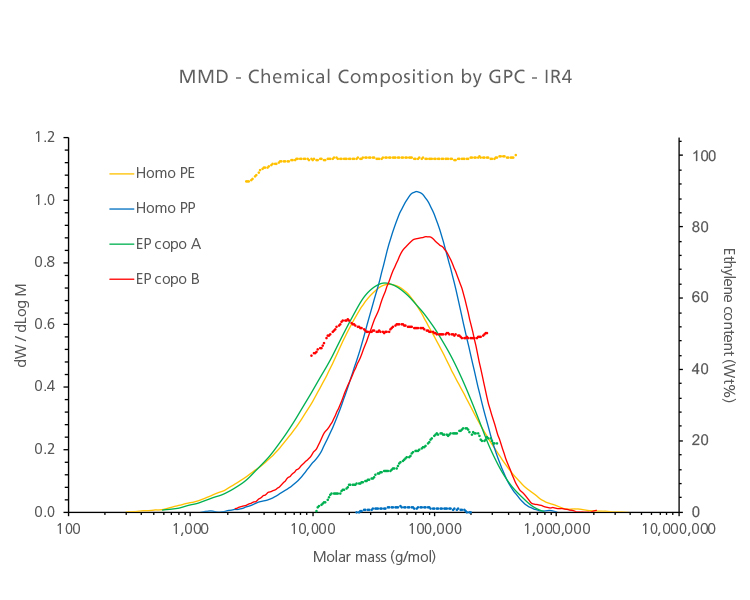
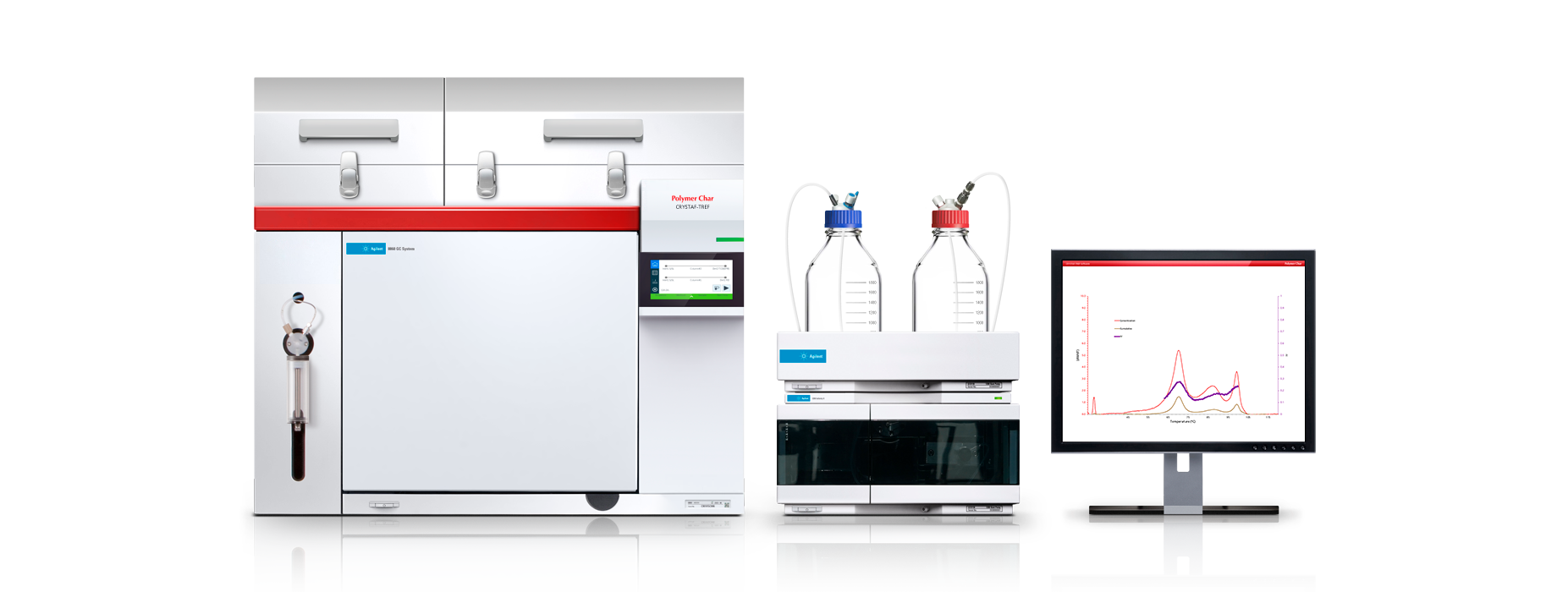
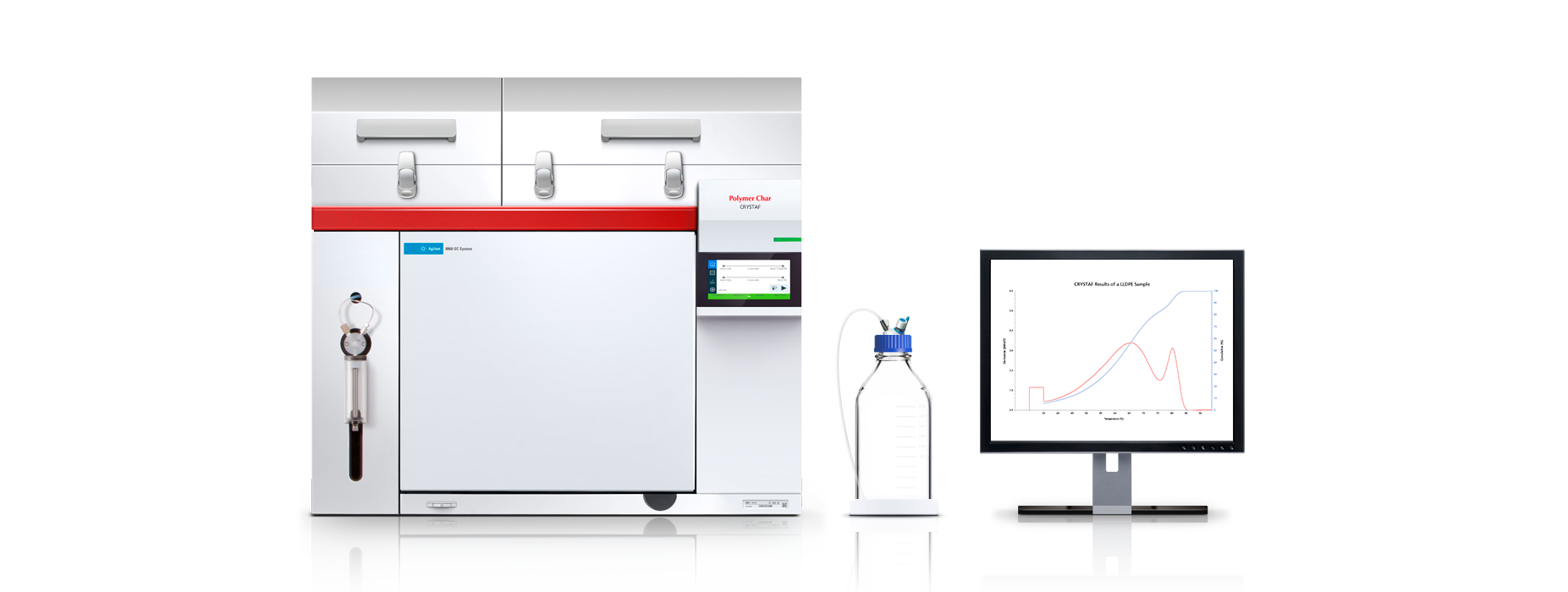
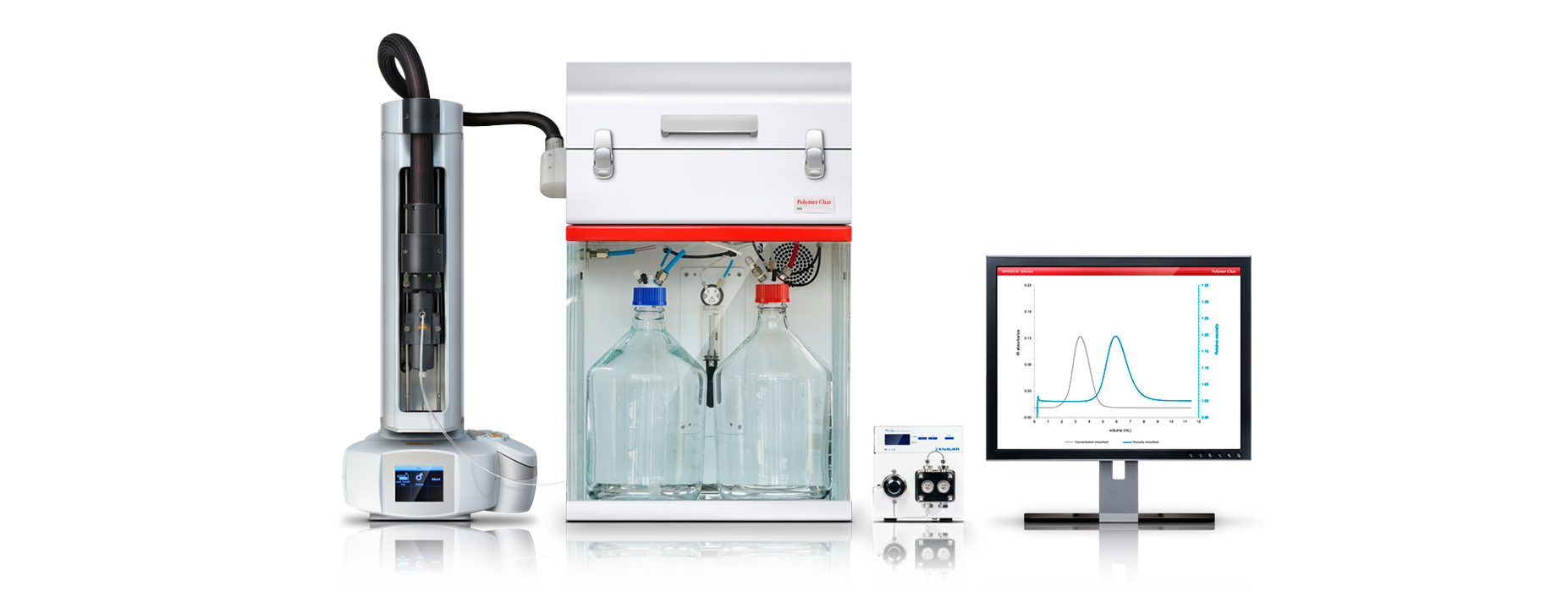
Robust and reliable detection in high-temperature solution techniques for polyolefin characterization: CRYSTAF, TREF/CEF, CRYSTEX, QC instruments: CRYSTEX QC, CRYSTEX 42, IVA, GPC QC.
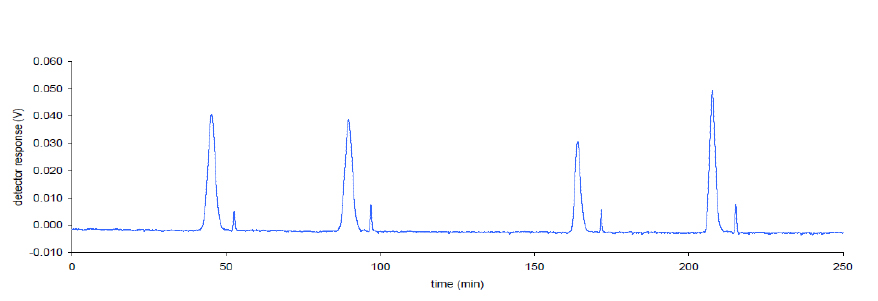
Short stablization time after flow rate change or oven temperaure variation and outstanding baseline stability ideal for GPC application
Spurious injection peaks usually seen in DRI,
do not appear in IR. The baseline is very clean before and after the sample peak which helps in a more precise definition of baseline and integration range. Therefore, consistent values of Mw and Mn are obtained.
A methyl sensitive detection head (installed as default option in GPC-IR instruments) allows detection of short chain branching in LLDPE. Determination of average SCB or comonomer content as well as SCB variation along MMD.
IR4 is a dual-wavelength infrared detector, which uses the principle of infrared absorption spectroscopy to measure the concentration and composition in polyolefins. Thus, sensors inside are specifically designed in fixed wavelengths optimized for polyolefin analysis.
Any solvent which is transparent in the band of interest and compatible with the detector cell materials: stainless steel, sapphire, and Teflon, etc.
1,2,4-Trichlorobenzene (TCB), or ortho-dichlorobenzene are typically used.
Concentration and composition measurement in separation techniques like GPC, TREF, CRYSTAF or HPLC.
IR4 is the optoelectronic standard detector for most applications. It is provided with two measuring elements. The IR4 is a very robust detector for concentration measurement in GPC, TREF, CRYSTAF, etc. It also provides the possibility of measuring composition (methyls per 1000 carbons or level carbonyls, acetate, acrylate…) in copolymers.
The IR5 is the most sensitive detector by using a specially designed MCT thermoelectrically cooled sensing element. It can incorporate up to 5 wavelengths measurement and it provides superior stability and sensitivity in the GPC analysis of Polyolefins. It is being used in most demanding applications such as the analysis of very low levels of branching (methyls) in HDPE pipe resins; as well as main detector in 2-dimensional separation techniques (CFC, SGIC 2D).
Thank you for your interest. If you would like to know more about our detectors or have any question,
please fill out the form below and we will be contacting you.
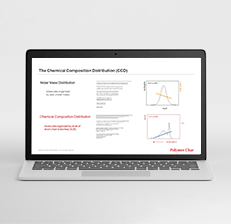
Webinar Chemical Composition Distribution in Polylefins
Date: December 2022
Speaker: Alberto Ortín
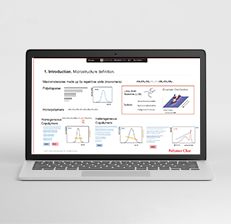
Webinar Modern Separation Techniques
Date: November 2021
Speaker: Alejandro Fernández
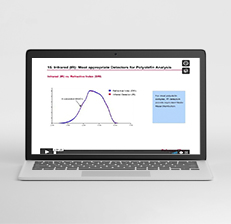
Webinar
Date: 2013
Speaker: Alberto Ortín
Presented at the 3rd ICPC Conference
November 2011
A. Ortín, B. Monrabal, J. Montesinos, P. del Hierro, N. Mayo
Published in The Column Advansatar Publications
Volume 7, Issue 7, 2011, Pages 8-15
April 2011
B. Monrabal, W. Yau
Published in The Applications Notebook LCGC Asia Pacific
September 2009
B. Monrabal, J. Sancho-Tello
Published in: Macromolecular Symposia. Polyolefin Characterization, ICPC 2012.
Volume 330, 2013, Pages 63-80. Wiley-VCH.
Authors: A. Ortín, J. Montesinos, E. López, P. del Hierro, B. Monrabal, J.R. Torres-Lapasió, M.C. García-Álvarez-Coque.
Published in: Journal of Chromatography A.
Volume 1257, 2012, Pages 66-73.
Authors: Alberto Ortin, E. Lopez, B. Monrabal, J. R. Torres-Lapasio, M. C. Garcia-Alvarez-Coque.
Published in: Houston Polyolefins & Elastomers Conference Proc.
1998, Pages 179-188.
Author: B. Monrabal.
Poster
Presented at the 6th ICPC
2016
Poster
Presented at the GPC Conference
2015
Poster
Presented at the 5th ICPC
2014
Poster
Presented at the APST
2011
Poster
Presented at the 3rd ICPC
2010
Poster
Presented at the 1st ICPC
2006
Other related instruments or techniques that might be of your interest:
This site uses cookies to give you a better browsing experience. If you continue
browsing this site we understand that you accept our use of cookies.
For more information,
please visit our Cookies Policy. You can configure which
cookies you accept by ticking the next options: